
- Love Pours from Her Chalice 10/28/2024
- The Lovers 12/06/2024
- A Requiem for Oliver Clinch 01/12/2025
- Where Dares the Butterfly 02/09/2025
- Eternity’s Corridor 09/25/2025
LOVE POURS FROM HER CHALICE
By
Michael DeStefano
What is love but a wonder countless poets have sought to express—an esoteric abstraction binding human consciousness with an unbroken thread, weaving an ever-broadening tapestry. Or is there more to an exploration we all seek and crave?
In his lifetime, a man will encounter more women than he can ever take the time to know intimately. Has he the predilection to love any one of them? Is our shared humanity an ineffaceable mechanism for falling in love arbitrarily? Are those we love placed in our path by a power occupying a province beyond our earthly grasp, or is love as random as a fluttering snowflake settling onto a blade of grass?
I do not profess to know even a single mystery in a universe of many wonders. The following is all that my mortal mind allows me to grasp, and for it, I am eternally thankful: Love of My Life, I was born to adore you, serve you, worship you, keep you safe, bring you happiness, or die trying.
We have known love in the past. Each time, the thrust of its lure failed when colliding with the burden of responsibility. Whenever the world of wearing influences finds its way to our bosom, we overcome it, strengthen, and ascend to a higher plateau. Our bond has never frayed or faltered; it has and shall remain unbreakable, for neither of us was a snowflake whose fluttery descent brought them to a blade of grass. Love of My Life, through raging storms to bursts of sunshine, we soared, for we were destined to guide each other in this lifetime. And thus, I pray that I am as nourishing to your soul as you have so steadfastly been to mine.
Love of My Life, our love endures; its ethos traverses the idyllic and all that is possible; its breadth transcends the poet and the pragmatist, the spiritual and the intellectual; it stops time and soars to lofty dominions; its journey clings to commitment as the soul does immortality. Until death do us part and beyond, I shall move, see, breathe, rejoice, and love under the wings of the angel the world has gifted me. I now and shall forever drink from your chalice.

To all you crusaders for love and hopeless romantics struggling to pen sentiments into a Valentine’s or anniversary card, please help yourself to my words. Keep love alive!
*****
THE LOVERS
By
Michael DeStefano
To know love exists marks the essence of hope. To experience romantic love is the pinnacle of splendor. To create it is magical.
The world is chock-full of wonders meant to dazzle the hopeful and receptive. On an impulse, a woman enters a room, and a man spirals through the universe, grazes the other end of infinity, and bounds back to where he stood.
The respective journeys our aspiring lovers blazed began six years and six thousand miles apart—improbable treks that coursed an ever-madding chasm they dared tread—yet, somehow, their paths intersected. Who was he before that point in time? Who was she?
Her softness, her angelic loveliness, like an impromptu gust of wind, whooshed through him, its thrust palpable as a surging tempest. When its obliquity finally settled, nothing stood where it once was, where he remembered it to be. Decades had vanished, and to where he cared naught but prayed a moment that brought to bear arresting profundity was shared equally. And thus, it was for the angel and her suitor.
They parted reluctantly, did these aspirants of love, with the near-breathless entreaty that they would meet again, and thus hope, like never before, hovered on a nearby horizon above an earthly plane where only naked souls dare tread. He took the vision of her to his bed that night, her scent still redolent in his nostrils. He was not lustful in his hours of reverie. His musings were those of a man enlightened to the notion that he would spend all his days gazing up at her from his knees, his view beyond enviable; no aspect of fauna, flora, or light in the sky could stir his soul as she could; she was the rarest of the rare, an echo of faith that traversed a madding world and rolled up on his shore.
Time passed; love flourished as quickly as they imagined it would. Splendorous nights and days filled with novelty and discovery, each folding seamlessly into the next, had followed in harmony. Words lilted like songs and thoughts like dreams as they played and frolicked in enchanted lands and uncharted waters, ascending to heights and diving to depths no mortal lovers ever reached, or so their boundless imaginations let them believe. They crossed the threshold to a sought-after pinnacle, a longed-for domain, and drew into their lungs its rarified ether. How sweet it tasted, and warmly it kissed their glowing bodies, tangled in a lover’s embrace.
Peace, serenity, and passion swirled in a garden of earthly delights these heavenly creatures had created from love. But then the air grew squalid and effluvial; the sudden perversion spread rapidly, its breadth ubiquitous and consuming. It frightened the lovers; it screamed to them the perils of surrender and the thrust of power they had over one another. The pinnacle to which they had ascended stretched to a dizzying height, a dominion where thrill often capitulates to fear. Swiftly, what prevailed was the notion that each could shatter the other’s heart into more pieces than they could count; thus, chariness reigned where love once played, and each cast blame upon the other for the ambient miasma that held them captive.
Like the finest silk tapestry, the perfection they wove was both artful and brilliant. It fooled the lovers into forgetting how incomplete they once were; ergo, they took turns assailing their love with defiance, willfully denying that each had hopelessly enslaved the other’s heart. And how trenchant they were in using the love each had brought to bear to fortify themselves and then claim strength and independence. It hastened a season of discontent that saw them as passionate lovers by night and antagonists by day, glorifying past loves and diminishing the richness of their fantastic beginning. No more would she wilt in his presence as when he embodied an ocean into which she could dive with no thought or care of drowning. No more would he crawl to her with the fervent cry, “A mere piece of you is worth more than any woman in totality.”
And thus, the lovers acquitted themselves as titans frothing with desires no one specific need meet; they clashed as would tyrants and children did these fools in love. Still, the season of discontent endured, levying its charges upon their resolve and once glorious sensations. But soon, summer’s sultriness would succumb to buoyant autumnal crispness. The lovers would cool with the cooling ether, agreeing to meet in early winter. A bleak, dark December night would determine their fate; they were to meet at a favorite haunt aptly named Strawberry Jam before the clock struck midnight. “If you are prepared to love me forever, then show. If not, don’t go anywhere near the place,” was the edict upon which they had agreed.
The risk was unimaginable, as each had envisioned themselves standing alone on a lonely midnight sidewalk, shivering in the bitter cold as the fraught seconds became minutes and minutes an hour of inexorable gloom.
As the autumn evening passed, a pensive quiet prevailed, each anticipating the empty weeks ahead. Their goodbye would wait until the morning. He lay awake watching her sleep; her face, in repose, was angelic and made him weep. Before long, he lay down his head and slept beneath her watchful gaze, blurred with tears.
The lovers woke at dawn to autumn leaves clustered here and there; the scent of a new season in full thrust ushered in evocations of hope. A morning that saw perfunctory movements edging toward the agreed-upon resolution slowed and grew chary; the lovers sensed a thrust of dread assailing them that they had squandered the magic that flowered their glorious conception. And now the lovers stood face to face, their gazes reflecting how, not long ago, they personified love at its most resplendent. Defiance came seeping from every pore of their bodies and swiftly dispersed into the ether; their lungs were finally free of the squalidness they had long endured. They uttered nary a word; their bodies expressed every offering, speaking, voluminously, a language neither had ever heard yet recognized with unmistakable clarity. Their tangled, impassioned forms echoed: You are boundless love and unleashed fury, the thrust of passion and unintended cruelty, the apogee of joy and wistfulness of pathos, the blissfulness of serenity and paradigm of chaos. You are all that there is— every raging storm and calm sea that has ever happened, and I am helpless but to drink it all in because I am nothing without you!
Their lovemaking spiraled to a pinnacle where passion and atonement collide, creating uncommon sensations. “Take me. Please love me,” were the near-breathless entreaties she uttered. He met her at the deepest depths of vulnerability with arms that would never let her go. They surrendered everything they were to one another and prayed their bounties would transcend fulfillment on the way to perfection.
No sooner than their ravaged bodies untangled, he fell at her feet, and she collapsed onto his back. They quaked with passion and shed tears of shame for allowing the sin of pride to taint their once-pristine waters. Never again would either deny the other was the missing piece that completed them. Never again would she know a day deprived of his worship or him seeking her approval, nor would there come a day free of her diving into his ocean to explore further the depths of vulnerability. They are and shall always remain the most splendid of lovers, their souls irrevocably intertwined upon their earthly quest for eternity.

*****
A Requiem for Oliver Clinch
By
Michael DeStefano
Not all elegies echo for the dearly departed. Some canticles of pathos ring for an unceremonious eviction.
It was a cold winter’s night, the twenty-fourth of December. A solitary soul roams the quiet lanes of a village during a time of anticipatory slumber. The lights in the village shops had dimmed; only the streetlamps were aglow, and nary a soul was afoot. Snow thickly dusted what hours ago were sidewalks that accommodated last-minute shoppers in search of a final treasure. The snow’s glittery descent glimmered in the streetlamps and the full wintery moon—a crystalline delight characterized this sleepy hamlet in repose.

Oliver Clinch had been walking for hours. The throng of merry bustlers had largely ignored him, though some took a moment, however briefly, to engage him with an enthusiastic nod or cheery grin—a child, in a momentary gush of glee, had pointed in his direction. Come dusk, the air grew frostier. With gloved hands, many pulled collars snug to their necks and hastened their strides, sparing no thought for Oliver Clinch.
And then darkness fell. The swarm of merriment thinned to a smattering of shiverers anxious for their next destination. The shopkeepers turned their signs to closed and ambled toward the village church. Oliver Clinch stood alone, his tiny nostrils pulsing in the cold.
Before long, there was no one about but Oliver Clinch. And thus, he ambled about the town alone in the frigid night air. Through one window, he watched men clanking mugs of ale, their toast a crescendo of jollity; through another, a woman prayed to an infant, many years ago born a king. On he went, up one lane and down another, imagining the balmy days of summer. The clock struck midnight; its gong had echoed that it was Christmas Day. But for whom was it Christmas? Using a bare extremity, a thirsty Oliver Clinch drew a dollop of snow to his mouth.
And then the night grew colder yet; it took no pity on Oliver Clinch. The midnight mass ended; its chorus of hallelujahs echoed into silence, swallowed by the icy air. At the base of a stone wall, away from the wuthering wind that stung his eyes, Oliver Clinch had crouched. He tilted his head skyward and cried, “Please. Please, Sir. I’ve done my very best.”
No sooner had his words of desperate entreaty echoed and died, than he spotted a cellar casement just yonder, did Oliver Clinch. He scurried across the way, peered through the pane, and prayed, “It’s Christmas, Sir. Have mercy.” Next, he gave the casement a push, and it budged! He pushed again until it opened enough so that he could gain passage to the other side. Then, in he went, careful not to make a sound. Next, he crouched in a corner obscured by a heap of odds and ends that typically accumulate in cellars. He sighed, did Oliver Clinch, that he had escaped the harshest of winter nights. As the warmer air settled in his lungs, his lids grew heavy and then heavier. Before long, he drifted off into a peaceful slumber, setting aside the fear of someone discovering that he had trespassed.
Morning came. Church bells rang. It was Christmas in the village.

Oliver Clinch woke to the footfalls of someone descending a staircase. He stiffened. Next, he heard them overhead. Before long, an aroma roused his olfactory senses. It was strangely familiar; he had experienced it once before in a time of yore. He recalled Absolom James telling Mortimer Grumby, “I know what ‘that‘ is; it’s what ‘they’ drink.”
“They?” intoned Mortimer Grumby.
“Indeed,” replied Absolom James. “And if ‘they’ drink it, then it must be terrible.”
Before long, others joined the one in charge of brewing the aromatic potion. The scene became a clamor filled with shouts of Merry Christmas, Cornelius, Cynthia, Mummy, and Father, joyfully ringing. Next, the aroma of blueberry muffins trailed through the house; it had accompanied the ripping of paper and the “oohs” and “aahs” that are often expressed when one receives an item they have long coveted.
“Whatever could it all mean?” Oliver Clinch muttered to himself while crouched in the cellar.
“It’s what I always wanted,” cried Cornelius.
“How could he have known,” chanted Cynthia as she unveiled a treasure thought delivered by a Ukrainian Saint.
Oliver Clinch nearly succumbed to curiosity but dared not ascend the stairs. Next rang the glorious tune Hark the Herald Angels Sing.
“Oh, that again,” Absolom James had long ago bemoaned.
“They sing it yearly,” Mortimer Grumby had sourly reminded his friends.
And thus, Father, Mother, Cornelius, and Cynthia set out to the village church.
“Look, Mummy,” cried Cynthia as she twirled about on the sidewalk, “It snowed last night!”
“From Christmas Eve into Christmas morning, it did,” cried Cornelius.
“It seems,” Father began, arching an accusatory brow, “that someone was spying from their bedroom window looking for ‘you know who’ when they were supposed to be sleeping.”
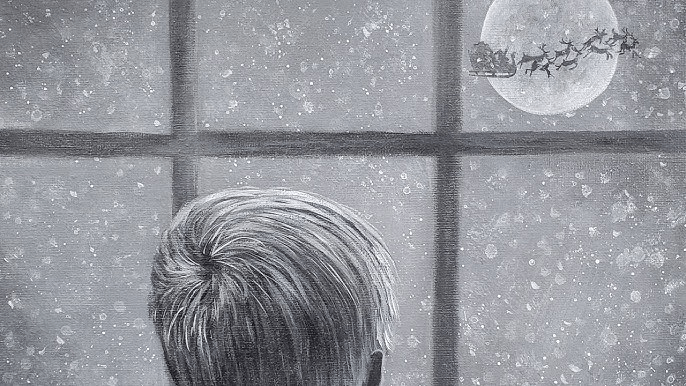
“Not I, Father,” Cornelius swore. “I was asleep the whole time.”
Meanwhile, Oliver Clinch crept up the cellar stairs and inched open the cellar door. He knew the coast was clear; still, he tiptoed into the kitchen. An empty muffin pan sat atop a table. Beside the pan stood a basket lined with linen. Four muffins were missing, and eight had remained.
“They’ll never know,” said Oliver Clinch, and he snatched one of the muffins, promptly devoured it, every crumb, and made haste for the cellar. It seemed that he had scarcely settled in his familiar corner when all four Crows, Father, Mother, Cornelius, and Cynthis, returned from the village church.
“Cornelius, did you help yourself to another muffin?”
“No, Mummy,” Cornelius swore. “If one is missing, it was not I who ate it.”
“Cynthia?”
“No, Mummy. My tummy is too small to have eaten a second.” Pointing, Cynthia drew everyone’s eyes to the tummy deemed too small to accommodate a second muffin.
Father made for the cellar. “I’m going to fetch some wood to make a fire,” he said.
The sound of plodding footfalls on the cellar stairs terrified Oliver Clinch; he crouched lower, moving nary a muscle, and held his breath.
“Hmm,” intoned Father. “That’s odd.” When he returned to the kitchen, with a log tucked under each arm, he said, paradoxically, “Funny thing, one of the cellar windows was left ajar.” He looked first at Cornelius, who swore, “I didn’t open the window, Father,” and then at Cynthia, who peeped, “Father, surely you can see I’m much too tiny to reach the window.”
Oliver Clinch shuddered, thinking that his presence and actions sent the household into an upheaval. He recalled once when the very wise Absolom James explained to Mortimer Grumby, “They account for all matters big and small, they do. There is no such thing as a matter so inconsequential that it could not provoke a war. Even more bizarre, it was they who coined the axiom Let bygones be bygones. Oh, the irony!”
Before long, the household became a potpourri of aromas and a menagerie of clatter. The Crows and their relations sang, danced, ate, dipped into a punch bowl (some more liberally than others), and lauded a babe born many years ago into a fraught world. And just like that, it was over. Despite all the anticipation, preparation, and commotion, the calendar, by way of its usual increment, lurched forward. And there, alone, in a darkened cellar, his back to a clammy wall, crouched Oliver Clinch. Absolom James and Mortimer Grumby must be sick with worry, he sadly imagined. I shall have a devil of a time explaining what happened. He glanced up at the casement Father had shut and locked. Unlike Cynthia, he could climb to reach it, but he lacked the strength to unlock it. Alas, a place of refuge from a harsh winter night was akin to a trap. But wait! The Crows were all nestled in their beds, fast asleep. He had many rooms to explore, did Oliver Clinch, and thus, he went tiptoeing up the cellar stairs.
Come morning, before Father brewed his aromatic potion, he exclaimed, “What on earth…?” Mother dashed to the top of the stairs and cried out, “What is it, dear? What’s wrong?”
Before long, all four Crows, Cornelius, Cynthia, Father, and Mother, were present in the kitchen.
“Can anyone explain this?” Father demanded to know, his mien twisting with vexation as he pointed to a banana peel left to rot beside the stove. Incredulity registered on the faces of Mother and Cynthia. Cornelius frowned with dismay.
“And what of that?” Father had alluded to pieces of tangerine rind littered atop a windowsill. His demand for knowledge was met with similar looks of incredulity and dismay. “I would say,” he grandly proclaimed, “we have a hungry intruder in our midst. What say you, Mum?”
Mother’s shrug suggested that she concurred. The notion of an intruder, hungry or otherwise, frightened Cynthia.
“What do you plan to do, Father?” The concern that manifested in Cornelius, although palpable, was somewhat ambiguous. Was it the hungry interloper he feared or what Father planned to do to one so bold?
Father grabbed the iron he used for poking the fire. “I’m going to the cellar,” he said, scowling. “I’ll bet that’s where the brazen rascal is hiding.” Oliver Clinch shuddered, knowing he had to find a way to escape or face the gravest of consequences. Father went charging down the cellar stairs, waving his poker and yelling, “I’ll thrash you, I will!” Before long, he cried, “Ah-ha, you rascal, it’s time for you to go! We don’t tolerate your kind in our village!”
“Oh, please, Sir,” peeped Oliver Clinch. “It was dark and cold, and the wind was wuthering. And, besides, it was Christmas.”
Oliver Clinch raced up the cellar stairs. Father followed, waving his poker. Cynthia stood agape at the intruder’s swiftness, and Mother shrieked.
“Father, don’t!” cried Cornelius. “He-he’s my…” Cornelius held his tongue. Then he dashed to the kitchen door, flung it open, and out went Oliver Clinch.
“He’s your what?” Father menacingly intoned. Cornelius could not answer. Moreover, he hung his head in despair. Later that day, Absolom James bellowed, “For crying out loud, Oliver Clinch, where have you been? Mortimer Grumby and I have been sick with worry.”
“I’m awfully sorry, Absolom James and Mortimer Grumby,” said Oliver Clinch, his tenor genuinely regretful. “It was never my intention to cause either of you distress. Truly, it wasn’t.” Next, Oliver Clinch explained, “I’m sure you both remember, for I mentioned it often, how I wanted to see the village on Christmas Eve. It was all quite festive, with strings of lights and folks calling Merry Christmas. But then it grew dark and did so faster than I realized. And you need no reminding how poor my sense of direction is, even in daylight; I was terrified I wouldn’t find my way home. And those keepers lock the village shops up tighter than drums they do. Still, I feel compelled to mention that they’re not all bad. Most are bestial, naturally; evolution doesn’t work that quickly. But there are a rare few who do seem to grasp the concept of love and compassion.”
“Hard to imagine,” said Absolom James.
“Indeed,” added Mortimer Grumby.
Oh, have I got a story to tell,” Oliver Clinch brightly intoned.
Over in the village, Father asked Mother and Cynthia, “Where’s Cornelius? I haven’t seen hide or hair of him all day.”
“He seems to have banished himself to his bedroom,” said Mother.
“He brought along a tablet and pen,” Cynthia thought to remark.
… and then the boy stirred when the night was darkest, and everyone was fast asleep. He had a premonition of a desperate soul in need; perhaps they were cold and hungry. He lit a candle and crept his way to the cellar.
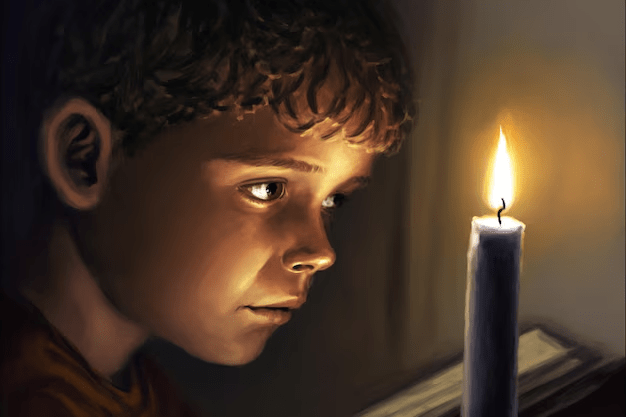
“Shhh,” said the boy with a finger to his lips. “You have nothing to fear.” Then, the boy disappeared briefly and returned with a crust of bread. “Here,” he said. As the boy watched the hungry soul nibble the morsel, he thought aloud, “I shall call you Oliver. Oliver Clinch. Would you like that?”
Oliver Clinch seemed pleased with the name the boy had chosen.
I believe you and I shall become fine friends, Oliver Clinch, very special friends indeed.
Next, the boy told his new friend that he could expect a blueberry muffin come morning.
“Good night, Oliver Clinch. And Merry Christmas.”
“So, I guess there’s hope for them after all,” Absolom James and Mortimer Grumby reluctantly conceded.
“If only they could remain as children,” said Oliver Clinch.
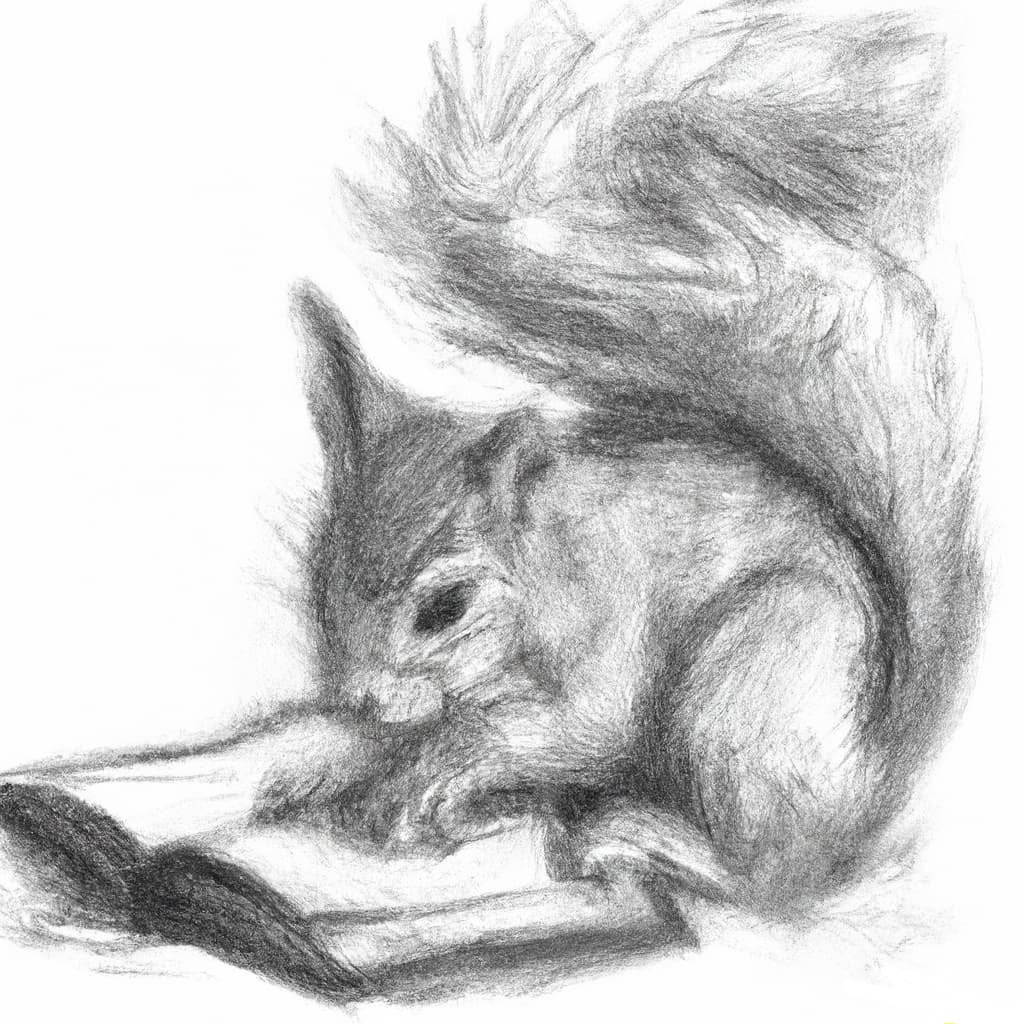
A Portrait of Oliver Clinch
*****
Where Dares the Butterfly
By
Michael DeStefano

Ever since humans either crawled out of the slime, swung out of a tree, emerged from the ocean, or wherever it was from which they made their auspicious debut, they—be it the theist, atheist, noncommittal agnostic, existentialist, eternal optimist, and brooding pragmatist—have grappled with the ultimate question. And just what is the ultimate question one might ponder?
Is it: is there a God?
Nope.
How about: Does a dominion called Heaven indeed exist?
Nah.
What about: do we get reincarnated?
Uh-uh.
Wait! I think I’ve got it! Is it… Why do fools fall in love?
Bingo!
So why exactly do we (fools) engage in a phenomenon that challenges and often confounds the rigors of every aspect of the epistemological landscape? The answer is an abstraction some refer to as “shared humanity,” which readily provides the gateway to experiencing chemical reactions when engaging with certain people. In other words—save for sociopaths, psychopaths, and those suffering from other forms of derangement—we, irrespective of the outcome, are genetically hardwired to fall in love. Perhaps the more poignant question is: why are we hardwired to experience a phenomenon with the potential to levy devastating consequences on our emotional well-being? Love, as most shall come to learn, can be grand but does not always go swimmingly. Making oneself vulnerable to another and experiencing the mishandling of one’s trust can leave even the strongest among us a shattered and brooding mess. And yet, many leap without thought whenever that certain someone comes onto our radar. We cannot help ourselves; we are doomed to enthrall one another, fall in love, and, unfortunately, disappoint nearly at the same rate that we succeed.
From our initial awakening until we draw our last breath, we are slaves to passion, hopelessly bound to our ventral tegmental areas (VTA) located in the brain’s hypothalamus region. Our VTA illuminates like the Lincoln Center Christmas tree at the mere mention of that “special someone’s” name, irrespective of whether or not that “someone” is a suitable match for us.
And that introduces the poignant question: How do we know who among our potential wooers is suitable? More importantly, what explains our brains supplying us with enough cortical intelligence to create, innovate, and engineer, but failing to decipher any dissimilarity between a “crush” and long-sustaining love? It almost begs the question: is falling in love grounded more in the titillation of risk than in the coalescence of monogamously aspirational souls, suitable for pair bonding?
Okay, so we haven’t budged from the dilemma of how to determine who among our pheromonic detainees is suitable. Moreover, the quandary won’t diminish love’s function as a biological necessity; its requisition is as vital to us as food, water, and exercise, and yields a bounty enriching to the body and soul.
Let us imagine a relationship. A man and woman meet. Sparks fly. Romantic love springs forth like a field of tulips in Holland, its vibrancy breathtaking. For two, three, perhaps six months, they exist in a world, an insulated fortification allowing room for only two occupants. Day after splendorous day, the story’s protagonists construct their cocoon; its tightly woven fibers spring from the thrust of their passion and depths of breathlessly uttered sentiments. In their cocoon, they laugh and love, frolic and explore; each day brings celebrations featuring romantic dinners and moonlit strolls; each gradation hastens discoveries that feed the flames of desire. In their cloistered world, language and laughter nourish the soul, which soars to a lofty dominion and then surrenders to quivering, sanguine bodies hungering for expression. Indeed, a lover’s cocoon is a domain of rapture and a pinnacle of longed-for enchantment. If only they could remain forever hidden in the utopia their beating hearts crafted, love would always flourish, day after day doling out its rich spoils. Or would it?
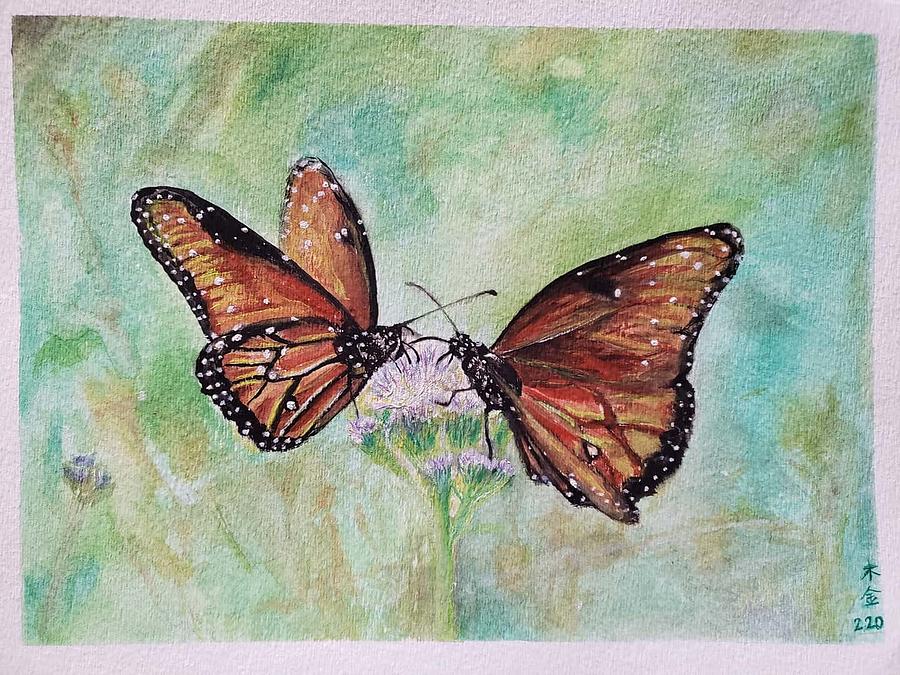
Nothing that goes unchallenged can flourish for long. All creatures need room to grow; they must push against boundaries, thus they may dance in fields under a different sky and draw the thrill of novelty into their lungs. Just as the butterfly must scratch its way through the fibers of its chrysalis and bear its delicate wings, so too must lovers take their relationship and map it onto the world and its wearing influences, damn the consequences. The risk is significant, as the world and its bearing will doubtless levy its charges, often mercilessly. Adversity, unfortunately, is the one true metric available for determining whether one who adored us so splendorously while nestled safely inside a cocoon is genuinely suitable to walk alongside us throughout our lives. Their juxtaposition to us when the world throws its haymakers will speak volumes. Some will stand behind us, ready to catch us should we fall. Others will stand by our side; their objective is to form a united front. The rare ones, those born understanding the value of sacrifice and responsibility, will step in front of us and shield us from the punches, and the “lesser” rare ones, the self-servers, will run for cover, save themselves, and leave us to dangle alone in a fraught wilderness.
Safe in a cocoon, the latter goes unrealized; the ether in a lover’s cocoon reveals little of one’s true character. Thus, we must surge ahead, traversing the challenging progressions of a love affair; we cannot cheat the process but instead welcome the risk that it will either lift us toward the heavens or scorch the hearts we have so generously bestowed. For better or worse, we fools in love must act as bravely as the tender, vulnerable butterfly in a madding world, else we shall never taste the sweetness of the air at the fabled pinnacle where true, enduring love so splendorously dwells. The ascent can be treacherous; one is bound to lose their footing, perhaps even stumble when approaching a precarious height at the threshold of the promised land, but the thrust of everlasting love bursting into our soul is always worth the risk and why we, the eternal optimists, hopeless romantics, fanciful idealists, and guileless fools, fall hopelessly and deeply in love.
*****
ETERNITY’S CORRIDOR
by
Michael DeStefano
It was upon a summer’s breeze that the echoes from a forest beckoned a young lass. Often, from the confines of her mother’s garden or with her elbows resting on her bedroom windowsill, she had wondered about the wood just yonder did our golden-haired youth but never had she ventured into its denseness. Today, with trepidation but also imbued with the spirit of adventure, her little feet marched toward the edge of the often-wondered-about woodland domain, paused, and then entered.
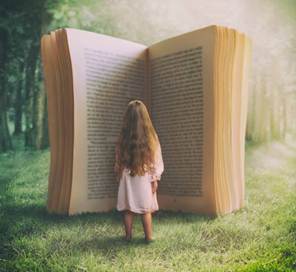
No sooner than the forest enveloped her, she felt decidedly cooler, as the sun, which before had generously kissed her golden mane and delicate shoulders with its summer warmth, filtered sparsely through the canopies of countless treetops. And thus, her innocent eyes widened, taking in all the woodland enchantment there was to behold. A tawny fawn with timorous eyes loped across the path and vanished into the brambled growth between the trees. A golden-billed magpie flew down from an arched bough and flapped one of its wings against her shoulder.
“Is that how you say hello?” she asked.
The little flyer tweeted, circled her head, and then returned to its perch. Then the girl ventured further into the forest and, before long, spotted a young boy. His dark ringleted hair brushed against his shoulders, and his dark eyes gleamed. The girl sensed that the boy, like the fawn and the magpie, was not passing through but had made the forest his domain, and thus she asked him, “What do you do here?” Delighted by her sudden and unexpected appearance, he told her, “I love to play. Please, come and play with me.” And together they ambled about their woodland realm, bound only by the limits of their childlike imaginations. They waved at grinning elves who winked and then hid behind the clustered leaves of a sturdy oak.
Look!” cried the girl, and they began chasing after a sprite, hovering above the forest floor.
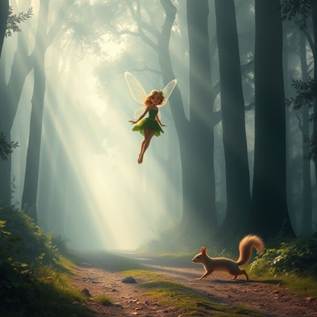
The pixie allowed the spirited youths within reach of its wings, then ascended higher. Again and again, it lured the ambitious pair only to drift out of reach. It was a rollicking game they played until the children collapsed in a heap, giggling as only children can. Next, the sprite hovered overhead, the wind from its wings swooshed against the children’s eyelashes, and then it flew away.
The children caught their breath just in time to run from a troll who threatened to steal their youth and beauty in exchange for its age and ugliness, or worse, turn them into statues. And then there were druids and sorcerers weaving spells that turned the tiniest forest dwellers into giant beasts and the tallest trees into an army of dwarves. Deeper into the forest they ventured, encountering winged serpents with breath hotter than a scorching sunbeam, knights of incomparable bravery, and centaurs and unicorns frolicking on a grassy plain. They held hands and played “Ring Around the Rosie” while circling a tree, then ran up the sides of hills, singing songs, and rolled down the sides of others, their voices distorted by the vibration caused by rolling. They continued until they were too dizzy to stand, near breathless, and exhausted. Next, the sun dipped below the horizon, and dusk settled in the forest; a summer day, chock-full of childlike adventure and enchantment, was slipping away. The young girl lay gazing up at the darkening sky, remembering how the day had begun and how her curious nature had overcome fear, leading to a day of unparalleled delight. She turned to thank the young boy, but he had gone, vanished. She shuddered, thinking that the fawn, magpie, elves, sprite, and the companion with whom she had shared a day of many wonders was all but a fanciful dream.
She returned to the forest’s main pathway and turned westward, but not even a faded outline of her home was discernible. The woodland creatures of the night bade her, “Follow the moon, dear child,” and thus, undaunted, she walked deeper into the forest. With each step, she felt herself surging from within and sensed a new paradigm had overtaken her façade. She pressed onward through the night, with no memory of her legs faltering or her body settling into the soft grass of a moonlit meadow. She woke soaked in dew; the early morning rays stung her eyes. Scanning the meadow, she noticed the creatures of the night were presently at rest, and the day shift had begun. Her old friend, the golden-billed magpie, tweeted, “Good morning,” and then gushed, “My, how you’ve grown!”
Across the meadow, she spotted a boy. He hadn’t a plan for his dark, tufty tresses, but his dark eyes gleamed with inquisitiveness and intelligence. She approached the boy and asked him, “What do you do here?” and the boy replied, “I am always discovering new things. Come and discover with me.”
And off they ventured into the world and its many wonders, armed with a thirst for knowledge and a curiosity so insatiable it was matched only by the desire to learn together. They stood before the Fountain of Youth, thought to have been discovered by Spanish explorer and conquistador Ponce de Leon, and dared one another to drink its waters.

The boy, who nearly succumbed to temptation, said, “Ne; let us return with our cups when we have acquired sufficient wisdom.” The girl agreed that the dawn of pubescence was not a wise time to remain frozen in time.
“You are right,” she told her companion. “We mustn’t remain nascents forever.”
And thus they explored the world’s ancient empires, the Greek and the Roman, and sat at the feet of Pythagoras and Cicero, learning the theories of space and proportion, as well as the importance of statesmanship and philosophy. They stood on the shores of Greenland, awaiting Eric the Red, and sailed a strait named for Ferdinand Magellan on a ship called Victoria. They studied Copernicus’s once blasphemous theory that the Earth and its neighboring planets revolved around the sun, and marveled at the wonder of the firmament, peering through Galileo’s telescope. Lastly, they arrived in a place once dubbed “The New World,” where a man using a kite and key discovered electricity, and revolution and innovation launched a new way of governance. And still their thirst for knowledge and enlightenment remained robust. But the daylight was fading; the night came fast.
“Where did you go?” the girl cried out to her companion. The boy, like the child before, had gone, and she, with all her newly acquired knowledge, was left to ramble the forest alone. She missed her mother and wondered about her home, but was urged onward, deeper into the forest, by the nocturnal inhabitants of the wood. As she trudged through the darkest hours, like a flower whose tight bud began to open, she could feel her shape blossoming. And then the Earth turned. Before long, she felt the sun’s warmth on her face, and when she opened her eyes, from across a meadow whose dew had already dried, she spotted a young man, ruddy of complexion and sinewy of form. Intuiting her now fully unfurled blossom exuded charms too alluring to resist, she approached the young man with decorum and confidence, a manner oddly contradictory, and asked, “What do you do here?” Beguilingly, he replied, “I burst with love. Come fall in love with me,” and she latched onto his outstretched hand, and together they ambled over sundrenched fields of green, were enchanted by every echo when immersed in their woodland cathedral and dipped their feet in the calm waters of a nearby pond as they spoke the language of Keats and Byron.
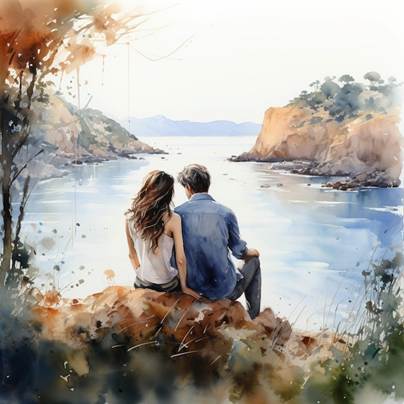
“I shall know no other but you,” he breathlessly told her.
“Nor shall I know another, my true love,” came her impassioned reply.
And thus, they took their pledge into a world of wearing influences. Instead of wavering, their bond grew more fibrous. And when their tangled bodies soared to the pinnacle of intimacy, there were moments of idyllic splendor that surpassed all that was once foretold and imagined, for to know one another’s skin was to peek into Heaven.
Come the end of the day, the young woman watched her lover as he gathered wood for a crackling fire. She rushed to lend a hand but found herself, in the dimness of twilight, standing alone. Her lover, as did the boy who once beamed with a lust for knowledge, had disappeared. But she did not feel forsaken. She understood that she was Penelope to his Odysseus, Jane Eyre to his Rochester, Eurydice to his Orpheus, and was confident the guiding forces of fate would see them reunite in a sundrenched meadow upon her nocturnal journey through the forest’s central corridor.
And there he stood, a man bound by the present with an eye on the future, and she said to him, “What do you do here?” He told her, “I am driven to build. Come and build with me.”
No sooner than he guided her over a threshold, they found themselves frothing with love as they peered down at a cradle-lain infant; the child would be their first of three.

And as he worked the land to draw forth the richness of its bounty, she healed the sick and cared for the wounded. Come the evenings, once the children were ushered off to bed, they sat by the hearth, sipped tea, and counted their blessings, for their story was one steeped in true love, written with the help of a loving God, amid a madding world. And there were summers at the seashore and Christmases at Grandma Elizabeth’s, who each year crooned, “My, how the children have grown.”
“And they’re devoted to their studies and strong enough to help their father in the field,” the children’s mother told Grandma Elizabeth.
On marched the seasons—their inexorable procession bringing growth, change, and adversities that stretched their already boundless love—including one that saw her nurse him through a bout of typhus just in time for the harvest that supplied a Thanksgiving feast. And then, one by one, the children sprouted wings that took them into the world.
“We need to lengthen our table and supply more food for our celebrations of gratitude,” she told him. And right away, he fashioned a leaf to accommodate the fronds from their tree of life, and cultivated for a more robust yield.
“Well done,” she said, and opened her arms wide and inhaled deeply to envelop and breathe in all the fruit of love’s labor. Come the evening, she went to the kitchen to boil water for tea. When she returned to the hearth with a kettle and two cups, she discovered he had gone. She stared into the fire, at first with fraughtness, then with benevolence, for life had not betrayed her; it moved on. The fire began to fade, then disappeared. She felt a nip in the air as her feet crunched the season’s spent leaves. In the autumn of her years, the forest was far less dense than it was when she entered in childhood. She trudged onward from dusk until dawn. In the distance, the morning light set ablaze a cabin toward the end of the corridor. On the porch, she spotted an old man rocking and said, “Excuse me, sir; what do you do here?”
He looked past her aged face and into the light that still beamed in her eyes, and he replied, “I am always remembering. Please sit and remember with me.”
As she reached for his hand, she saw a young lass bursting with wonder as the wind blew through the dark ringlets of a woodland lad. And then there they stood, ambitious youths, thirsting for knowledge, absorbing the wisdom of sages and philosophers, and the facts of science and mathematics. And how they rejoiced in the thrall of romantic love and all that flowered from their indestructible bond. On and on the memories floated past them; there were so many to sort, to embrace, to savor. But come the morning, she woke and rocked beside an empty chair. She looked east into the light at the end of the woodland corridor.

Just as the echoes of a forest once beckoned a young lass, the light compelled her. And thus, she marched, a humble servant, resolutely toward the luminous end of an unforgettable journey. Alit at the threshold, she saw a hand amid the glow. She reached for it, grasped it, and the hand guided her to a lofty dominion from which flowers Humanity’s conscience. And then they fell on their knees, did these children of enchantment, of knowledge, of love, of faith, of duty, and of family, and cried, “Dear God, in all Your mercy, we have walked Your corridor to its eternal light and we are home.”
*****
-
-
-
The Lovers is the reminder that above all…love endures if you allow it. What a beautiful read.
LikeLike
-
Thanks for the acknowledgement. And I must confess, with the aid of some flowery lyricism, it is an autobiographical depiction of the first ten months with the woman who became my bride and life partner.
LikeLike
-


 Michael's Corner
Leave a reply to dtbhs4293d7f39f Cancel reply