
Table of Contents:
- The Case for a Hybrid 10/28/2024
- Who’s The Boss? 11/24/2024
- What’s it Worth? 01/01/2025
- The Universe in Keys 04/01/2025
- America’s Diamond 08/03/2025
- The Age of Anxiety 12/27/2025
- The Time Traveler at the Tavern 5/29/2026
The Case for a Hybrid
By
Michael DeStefano
If a historical figure, be it Jesus Christ, Aristotle, or someone as recent as Benjamin Franklin, approached me and asked, “Hey, Mike, how is humankind managing nowadays,” I would feel obliged to offer the repartee, “We’re pumping oil from the ground to funnel globs of wealth to rent-seeking corporatists who never return fair value to society and communist dictators who seek to enslave entire populations. How do you think we’re managing?”
Typically, I don’t care to answer a question with a question; however, if a scenario as fanciful as the above were to arise, it would mark an appropriate instance to apply the Socratic method.
For the record, I am—its over-exploited baked-in rent-seeking component notwithstanding—a capitalist. Capitalism, however flawed, has proven to unlock human potential, whereas Communist/Marxist agendas deamplify the unrealized when applied lightly and quell it altogether when applying too strong a touch. There are other stark dissimilarities between these competing systems and one glaring and fraught commonality, though with an ironic bifurcation: Communist utopias tend to commit mass murder within the borders of their countries; Capitalist hierarchies do all their killing in the “other guy’s” backyard. Pretty grim, huh?
For now, let us stay with capitalism or market economy: It is a system that relies entirely upon growth; it must travel forward into the future while drafting new people and nations into its vortex. But thin air does not produce growth; growth comes from somewhere, or something, and the place or entity responsible for creating it cannot keep the system humming at a capacity that suits our demand to live a life based on certain qualities and expectations; sometimes, the machine malfunctions or breaks down and requires repair.
So, what happens when growth slows or, worse, stops? The world, particularly the West, transforms into a massive game of musical chairs—a free-for-all, where all the collaborative magic that built the West disappears and, in its stead, we see the reinvigoration of tribalism and the reopening of old wounds we thought had fully scabbed over by the late-nineties and early aughts. The scab may have fallen off; unfortunately, the new skin left in its wake lacks resilience; it shrivels at the sound of truth and thus must be coddled.
For anyone paying attention—not to stock pricing but to the lived experiences of the West’s citizenry—that we are not growing in the 21st century as we did in the 20th is glaringly apparent. The 20th century saw ten centuries of growth and innovation condensed into ten decades. It’s incredible what can happen when you insert a combustion engine into an apparatus that provides people with never-before-experienced mobility. The leaps in transmission—telegraph, radio, television, internet—were equally impressive. Another surge in juice arose when channeling electricity to small and large appliances. It used to take me twenty minutes to saw through a log; now, I can do it in eight seconds because I have a chainsaw. One can argue that free-market capitalism laid the infrastructure for these rapid progressions and innovations. But there is a counterargument: No one writes a book, composes a symphony, or spends years tinkering to prove a scientific hypothesis motivated by the acquisition of wealth and power; they do it because their passion compels them. So, one could make a case that 20th-century modernization would have occurred irrespective of capitalism, but not as rapidly; the advances we enjoy today may have required multiple centuries to achieve.
So, we have one irrefutable fact: the 20th century gave us rapid, unprecedented growth. It also posed a dilemma: How do we piggyback onto the last century, another of similar proportion? Thus far, digital and cloud-based technologies have fallen short. The jury is still ruminating over AI and how its application can boost growth. Multiple iterations of a product—the iPhone 1, the iPhone 6, the iPhone 11, the iPhone 15, etc.—do not seem like a viable pathway to growth, nor does adding more layers—DoorDash and Uber Eats—between a product and consumer. And yet, we continue to use 20th-century economic metrics to measure success today. Are we setting ourselves up for failure? More importantly, how do we keep from cannibalizing ourselves as we await the next boom—be it technological, scientific, or a fusion of each—to save us?
America has learned some nifty tricks that can mimic growth but are not: deregulation and war for profit. When necessary, we deregulate at scale to create short-term economic windfalls that appear “growth-like” but come with a set of dangers, and we wield power and influence to manipulate ourselves and others into war, which, aside from being immoral, has obvious consequences.
So, we have competing systems prone to misbehaving when they don’t get their way: The capitalist says, “Trade with me or else…” The communist holds your kids at gunpoint while recommending that you “rehabilitate” your method of thinking. In my modest opinion, capitalism is the more durable system, but with a caveat: Planet Earth is finite; it has a fixed landmass that can accommodate only so many nations. What happens when every country that can be recruited into the capitalist system has received its draft card? How do we grow from that point, assuming Elon cannot get us off the planet? More importantly, might or would the principles of market contraction and consolidation apply not only to economic cycles and corporations but to nations? Granted, we could be a century or two away from approaching this dilemma, but with technology as a proven accelerant in fanning the flames of evolution, it could come sooner.
And now begs the question: what can we do with two systems that kill to stay alive? Communism/Marxism has more blood on its hands as it tends to kill in higher concentrations, but capitalism is no walk in the park; although counterintuitive to its needs, it has contributed plenty to ease the minds of those holding Malthusian concerns.
Thus far, the 21st century has gone out of its way to demonstrate the need for a hybrid economy. What that economy would look like and the collaboration required to hasten it are uncertain, but, as many of us can sense, we are heading toward a precipice, guided by forces that claim to have our best interests but do not. If we can devise a system in time to keep us from that precipice, I imagine, like the Enlightenment, the project would be primarily a Western initiative, keeping in mind America’s founders created a blueprint that, although imperfect, had better bones than any other standard-bearer. I also imagine that if it is not a death cult, cares for its children, understands a woman’s worth, reconciles that men are not disposable, embraces culture, and values human life beyond capital and labor, no one in the East would need their arm twisted. How can I dare assume as much?
Many years ago, not long after President Nixon opened trade in what was then often referred to as the People’s Republic of China, where most Western music was banned, Eugene Ormandy and the Philadelphia Orchestra played concerts in Beijing. The Chinese people did not defiantly grouse, “We don’t see ourselves reflected in your orchestra,” or carp, “This music is steeped in European Classicism and doesn’t reflect Chinese culture.” Instead, they embraced the music. A generation later, they were playing it back to us. Before long, they produced world-class virtuosos, rivaling any that had gone before them.
People recognize greatness. When they see it, they embrace it. It is within our potential to create an equitable hybrid from what currently exists; we have both the ingenuity and resources. Then, the next time I bump into Jesus, Aristotle, and Ben, I can report that we did discard the bathwater but managed to save the baby.
*****
Who’s The Boss?
By
Michael DeStefano


“Mommy, the globe is warming! I’m frightened; what should we do?”
There is a grave consequence to turning science into religion: It tends to breed hysteria and fanaticism. If only a politician turned raving evangelist, pounding his fist on a podium, proffering the hyperbolic claim that Kilimanjaro’s ice fields would disappear by 2020 and all of Indonesia would find itself underwater come 2025, had not been the one spearheading the climate initiative. If only…. Instead of an epic clash of biblical proportions pitting worshippers against deniers, sober and composed discourse might have ensued concerning the physical world, our relation to it, and how we could foster a more harmonious coalescence going forward. Politicians using “sciencey” language as an alarm bell will seldom unify a broad population, especially one accustomed to brandishing its inalienable rights and freedom with brashness.
I have always contended that the question should not be: Is there climate change? Despite the consequences of the globe’s more recent inhabitants (us), who have long exhausted their share of evolutionary speeding tickets, “When hasn’t there been climate change?” seems the more incisive question.
Mother Earth is a world comprised of a complex ecosystem offering variables so numerous that one would think collaboration was impossible and that these highly efficient partnerships producing wonders big and small were purely a matter of happenstance. Mother Earth is also part of a much vaster and far more complex system: the cosmos. It began as a ball of fire that a generous sun coughed up. The ball settled, cooled, sprouted microorganisms, various types of flora, paved the way for evolution, and before we knew it, there were burgers-to-go, Disneyland, jukeboxes, and Major League Baseball. Lucky us to have settled a mere 92 million miles from the sun, else we might have ended up a ball of gas or cobalt; neither surface would provide favorable conditions to accommodate theme parks and stadiums.
The systems responsible for Earth’s seasons, though highly complex, are quite predictable. However, the weather within each season depends on too many variables, making it complicated and thus unpredictable. The weather is why many Philadelphians listen to KYW News Radio in the morning; they want to know if there’s a chance of showers. Climate, meanwhile, is cyclical, and a typical cycle can last decades.
Recently, I have become enlightened to Milankovitch Cycles. These cycles involve the Earth’s eccentricity (the shift from circular to elliptical), axial tilt (obliquity), and precession (axial and apsidal), and last not decades but twenty, forty, and one hundred thousand years, respectively. The degree of impact these cycles, Serbian geophysicist and astronomer Milutin Milankovitch discovered, have on climate may be debatable, but they are not negligible; their collective machinations do not impact climate in a small way.
I have become particularly fascinated by Earth’s axial tilt factor. Milankovitch himself believed tilt, or obliquity, has more of an effect on climate than precession or eccentricity. Earth’s tilt ranges between 22.1 and 24.5 degrees relative to its orbital plane. With a greater tilt, more solar radiation (insolation) is distributed globally during summer. Currently, according to scientific evidence, Earth is between the two extremes of a 40,000-year cycle. So, chances are, we’ll see another world war or two, if not the revival of doo-wop and leisure suits, before the Earth returns to minimum tilt position. As obliquity decreases, the seasons—taking into account the volatility of weather—will become milder. The Earth will experience warmer winters and cooler summers, resulting in more snow and ice accumulation at northern latitudes. And because, naturally, whiteness is more reflective than greenery, these massive sheets of ice and mounds of snow will reflect the sun’s properties clear through the ionosphere and back into space; thus, the globe will lose a portion of its insolation. The result? The Earth will increasingly cool until the cycle reaches its midpoint (20 thousand years).
Okay, so Planet Earth is an entity with a satellite controlling its oceans and enjoys orbital eccentricity bound to a star that, give or take a block, is 92 million miles away. In other words, it, meaning us, is controlled by cosmic hardware that creates cycles primarily responsible for climate and a bountiful ecosystem enjoyed by single-celled organisms, those with prefrontal cortexes, and countless others in between. Do Milankovitch Cycles absolve humans of any impact they have on global phenomena? Many scientists assert no; unfortunately, the scientific community, like many institutions whose primary function is to serve the nation’s citizenry—the FDA, CDC, WHO, etc.—has been captured by markets. Moreover, juxtaposed with medicine, astronomy, and other fields, climate science is the new kid on the block—a brash adolescent with a lot to say and chock-full of enthusiasm. In no way does this discredit it as alchemy or render it inaccurate, but we would be wise to bear in mind the amount of pollution that politics, markets, and other influence peddlers have compelled climate science to absorb. Doubtless, humans impact their habitat and environs—existence tends to come at a cost—but to what degree? Have humans become mighty enough to interfere adversely with powerful cycles that have endured since Earth’s first microorganisms appeared? Is carbon dioxide public enemy number one, or is the primary culprit methane gas from food waste? Indeed, humans could be natural-born homewreckers doomed to progress thoughtlessly and then crisis-manage with typical human mania. It is also possible that Planet Earth has friends in high places (our star, the sun) that have locked it into a system with cycles that will repeat, human involvement notwithstanding, ad infinitum.
Humans are programmed to think in terms relative to their lifespan and want problems solved during their lifetime. Why wouldn’t we? Unfortunately, concerning the issue of climate—assuming we have not overstated our impact and the problem is mitigable—we will need to alter our software because climate won’t be a matter for a lifetime but rather centuries. The current warming trend began at the dawn of the Holocene Epoch approximately 12 thousand years ago and won’t snap, assuming the cycle runs its course, until Cleveland wins the World Series. Most of us won’t be here to see the Guardians hoist the Commissioner’s Trophy. Neither will our children nor grandchildren. In fact, were we to subtract the number of years until the next cooling cycle from the present time, we would be standing on land called Beringia.
The globe had endured plenty—the Paleozoic and Mesozoic ages—before it could accommodate upright-walking creatures owning enough cortical intelligence to invent themselves into trouble. Possibly, it could stand a little TLC, some pampering; perhaps a day at the spa would be advisable. In other words, irrespective of one’s position on human impact on the climate, we should care for the Earth as we would our homes and families. But it’s been my experience, for every man with the phrase “climate hoax” resting on his lips, another beats his chest on behalf of global warming while driving home from Costco with ten cases of water (for those who like math, that’s 240 plastic bottles) crammed into his hatchback. Both may be right, and both may be wrong, and no one presently living will be around to know. Humbly, I would submit we should always seek to improve (with REASONABLE goals) when the issue is the environment, and if the climate tags along for the ride, it’s a bonus.
So who is the boss, us or the Earth? I often wonder how warm the globe must have been when giant cold-blooded lizards were the dominant species it once accommodated. I imagine a large portion of the world felt like Fort Myers in July. If that were the case, is it unreasonable to think the Earth endures a series of cycles within larger cycles and that we are slowly ticking back to Mesozoic temperatures with each series? It’s also fun to imagine the mass hysteria that would doubtless ensue were today’s hyper-reactive global community to learn the continents were drifting. Once upon an age, Brazil and Ireland occupied the same parallel. I struggle to grasp a world with Irish coffee and Brazilian whiskey. Thank goodness the continents drifted long before humans made their debut. Moreover, without oceanic buffers providing a measure of inconvenience, there is every reason to believe humans would have killed themselves off early in the Paleolithic age. It illustrates that the Earth is perceptive; it knew precisely when it was safe to allow our arrival. It is the boss.

*****
What’s it Worth?
By
Michael DeStefano
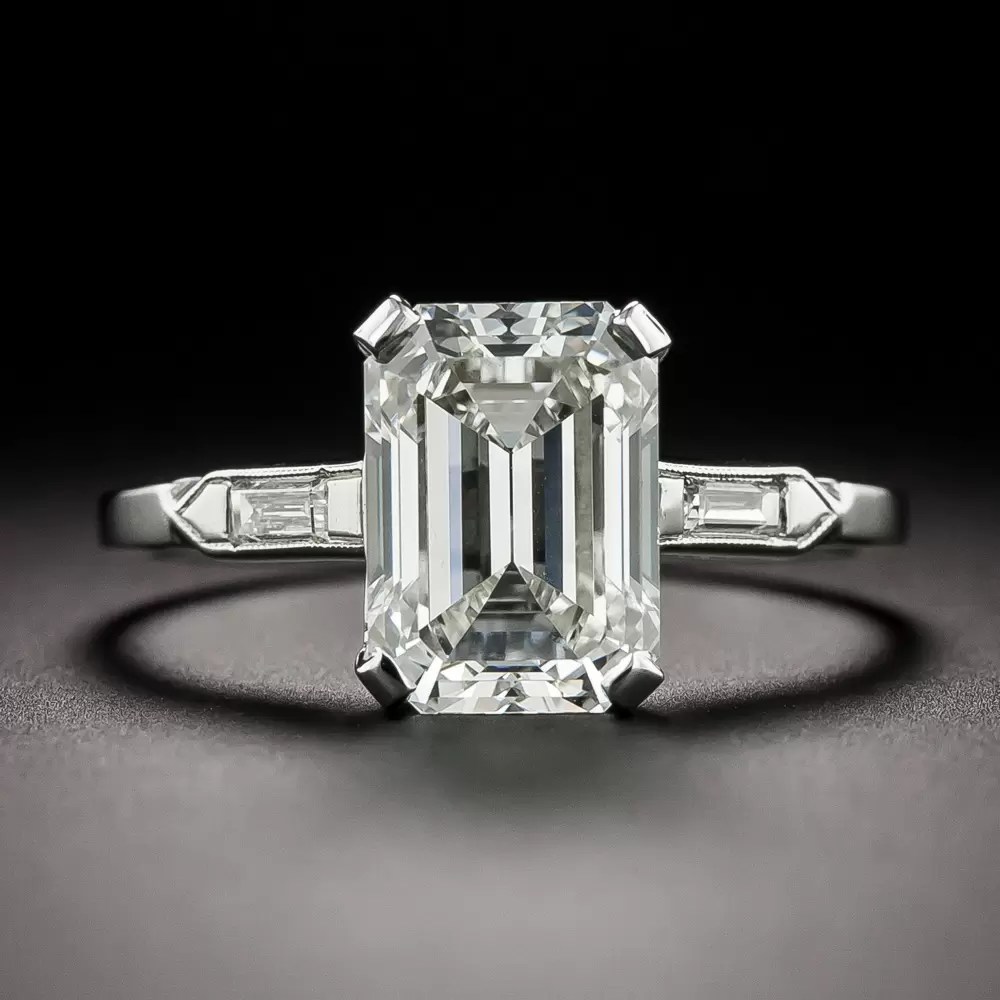
Lately, I have been grappling with the abstraction: What is value? Naturally, it led me to ponder the more nuanced and idiosyncratic question: What makes “a thing” valuable? Why did I decide to grapple with a concept sure to maroon me in a field of weeds that quickly obscured all signs of the path leading back to the road? Recently, my wife, who is typically far afield from acquisitive, intimated that she would not complain if she discovered herself in possession of an emerald-cut diamond. My initial inclination was to ask, What is an ’emerald-cut’ diamond? Without hesitation, my imagination rushed to an elflike figure wielding an emerald-bladed saw, tirelessly fashioning the edges of what was once a nugget of coal that evolution had turned into a shiny, highly coveted rock. To avoid the risk of revealing myself ignorant concerning the matter, I asked the great internet God Google, “What’s an emerald-cut diamond?” (Forgive the digression, but this is why search engines exist: so every married man has access to in-the-moment and on-the-go knowledge. It seems like a nice perk when one must compensate for a miserly endowment of brainpower; however, the world was a kinder, more generous, and congenial place when its dwellers felt free to pose stupid questions. This “knowledge is power” trip we’ve been riding has turned societies into insufferable confederations of tyrannical know-it-alls.)
Anyway, I wondered why it was so vital that my bride of thirty-one years and counting acquire this shiny, well-cut, polished rock. Its cost is equivalent to the Viking Cruise we have been considering. Isn’t an experience far more enriching than a thing? Moreover, who decided that a shiny rock was valuable, and why do we continue to adhere to this decision? Thus, into the weeds I went, juxtaposing mere objects with the virtue of experiences. (As you might have surmised, I place a premium on experiences and diminish the worth of possessions.) I began with what I believed was a credible measure of objectivity by examining my own reasoning and the possibility that it could be faulty. Things? Experiences? Who’s to say which has greater value? Perhaps I should shift my unbalanced premium for one over the other.
A Viking Cruise is an experience. An emerald-cut diamond is a thing. A work of art is also a thing, but gazing at it, assuming it stirs you, makes it an experience. Already, the matter is complicated. So, let us keep to value, from where it may derive, and how it receives designation. And now for my leading question: Is value grounded in facts or social hierarchy?
The world of facts or, as some prefer, objective truths, is a cornerstone of any civilization. A society, irrespective of its urbanity and graces, cannot progress in an organized fashion devoid of universal truths by which to abide. In other words, although humans have the capacity to thrive in the chaos they are so adept at creating, they can only tolerate so much before inundations of novelty produce more muddle than progress. And postmodernists may be stubborn to admit it, but their constructs would end up houses of cards if not erected upon a substratum of universal truths and facts they have worked so hard to deny.
Science is valuable to humankind. So, too, is mathematics. Both are fact-based disciplines: one seeks to create facts; the other is simply factual. Each allows us freedom to explore, but is unhesitant to let us know when we are coloring outside the lines. They serve as corrective mechanisms. But are these disciplines proof that value is grounded in facts?
Before we dare take a stab at a conclusion, let us migrate to the world of social hierarchy. People are drawn to legends or those who—be it through visible accomplishment or inherited myth—have achieved the status of “legendary.” Basketball fans of the 1960s and 70s might remember the term “Celtic Mystique.” Football fans from roughly the same era might remember “Raider Mystique.” To their everlasting dismay, baseball fans of many eras reluctantly remember “Yankee Mystique.” These are teams that, in their respective sport, often emerged victorious in ways many saw as inexplicable except for a belief in intangible assets such as mystique and lore.
Mystique and lore embellish history and titillate the present; they are why, for millennia, we have sat and told campfire stories. However embellished, these enrapturing yarns reveal the lived experiences of legends and help us realize the breadth of human potential. Facts matter, but they do not tell stories; their usefulness is greatly diminished in a setting such as a campfire. People influenced by mystique and lore tend to be storytellers, offering up tales and anecdotes that bring to bear the virtues of hope, perseverance, morality, and love. Moreover, because we view the world through stories, it would not be unreasonable to imagine that a campfire was the very place that first spawned the notion of creationism—that, under a night sky with points of light by a crackling fire, Neolithic man intuited a hand on his shoulder and handed down a story more durable than the pyramids. Indeed, it is very likely that, from the first campfire, a “tweet” arose that generations have “reposted” for 20 thousand years to an ever-widening lineage of seekers of revealed wisdom. But is this proof that value is grounded in social hierarchy, otherwise a domain where legends and lore typically dwell? The notion hardly seems practical, but it is no less practical than owning dogs and cats versus chickens and livestock. Yet few would judge such frivolity as a human failing.
So, why are diamonds valuable? Why do they possess lore and lure? Moreover, from what and where did the origin of their value derive, and why are they capable of causing visceral reactions in those counted among their recipients? I love diamonds; therefore, I am. The “where” is more straightforward: Northern India, approximately the 4th Century BC. The “what” is far more nuanced. Risking sounding too anecdotal, perhaps a man exploring a cave happened upon a shiny rock. When he emerged from the cave, his excitement generated a stir throughout the village. It led to another eager to trade away his best goat, milk cow, or firstborn. Hence, the man’s “alleged” overpayment launched shiny rocks toward the lofty status they have held since 400 BC and continue to hold today. I have a bone to pick with that man.
Status and value are not the same, but they can occupy the same domain and overlap when applied to the pyramid of social hierarchy. So, let’s run a thought experiment with that as the basis:
A coffee cup sits on a countertop. Someone purchased it at Five Below; let’s say it cost three bucks. It’s primarily white. Its design is the letter “I” followed by a red heart and the word “Java.” Okay, let’s list the facts: We have a coffee cup that holds a given amount of fluid, has a specific design, and retails for a certain price. Now, let’s say we place a second cup next to it that is identical in every way but with one distinction: It has been authenticated that it’s the cup from which Elvis Presley sipped his morning coffee. The value of the second cup will exceed three dollars. It will likely exceed $103 and perhaps $1,003. It may even find its way to an auction block where a roomful of Elvis enthusiasts are waiting to bid for the modest treasure. A pragmatic onlooker might intone, “Have these people lost their damn minds? It’s just a cup!”
The pragmatist is correct; it is just a cup. But its value does not align with facts. Its value has adjusted according to where Elvis Presley sits in the pantheon of social hierarchy.
Facts serve as human guardrails. They provide the underpinning that allows all the good stuff—mystique, lore, legend, hope, and faith—to flourish so that we may explore the richness of our humanity. The world of facts only has value when we cease dreaming and loving. And that can only mean one thing: I may not be much of an Elvis fan, but soon, I’ll be off to the jewelry store, credit limit notwithstanding.
*****
The Universe in Keys
Twenty-four thousand five hundred seventy-six possible scales can exist in an art form called music. It’s difficult to fathom such a wide-ranging exploration at one’s fingertips. But wait, it’s far more expansive than one might imagine. Keys, octaves, and scales are the components of a piano. Octaves multiply scales. A pianist can press multiple keys simultaneously within a tonal range, adding layers to the auditory tapestry, thus adjusting 24,576-scale possibilities to melody/harmony combinations running to infinity. In this pieced-together concert, “The Universe in Keys,” we will witness various world-class virtuosos performing masterworks by genius composers who stretched the boundaries of the musical landscape.
1: In our first piece, a youthful Alexander Lubyantsev tackles Franz Liszt’s 6th Etude—a transcription of Nicolo Paganini’s “famous” caprice. Other transcriptions followed: Brahms composed a theme and variations in 1862; later and more famously came Rachmaninoff’s Rhapsody On A Theme By Paganini and a nifty rock version by Andrew Lloyd Webber featuring the cello.
2: Again, Liszt and Paganini team up. This time, the incomparable Lang Lang sizzles in Liszt’s 3rd Etude titled La Campanella—a theme taken from Paganini’s 2nd violin concerto.
3: Whether as a Leopold Stokowski orchestral transcription or in its original piano solo form, who hasn’t heard Rachmaninoff’s C# Minor Prelude? If you’ve never heard Nicholai Lugansky’s rendering played as an encore, you’re in for a treat. Moreover, you’ll swear you’re hearing it for the first time!
4: On October 21, 2005, Rafał Blechacz became the sole recipient of all five first prizes at the 15th International Chopin Competition and a special prize for audience approval. Blechacz outclassed the remaining finalists by so wide a margin that no second prize was awarded. Here, Blechacz electrifies the audience with the Presto non tanto (4th movement) of Chopin’s Sonata No. 3.
5: If Igor Stravinsky’s Firebird Suite isn’t fiendishly virtuosic enough, let Guido Agosto’s piano arrangement of the suite’s Danse Infernale, Berceuse, and Finale dazzle you in this breathtaking performance by Maria Mazo at Fazioli Concert Hall.
6: Let’s shift the mood a bit. As an encore to Schumann’s Piano Concerto, Seong-Jin Cho, winner of the 2015 Chopin Competition, plays the meditative Consolation No. 3 by Franz Liszt. Liszt’s extreme virtuosity sold out concert halls all over Europe, but the great maestro also had a profoundly spiritual side, as is evidenced in this Lento Placido in D Flat Major.
7: One would be hard-pressed to find a composer and soloist who go together better than Sergei Rachmaninoff and Vladimir Horowitz. After 61 years, Horowitz, regarded as the 20th century’s greatest pianist, returned to his native Russia in 1986 for an unforgettable performance. The recital featured Rachmaninoff’s Prelude in G Sharp Minor.
8: Bruce Liu’s sensitivity is a perfect match for Chopin’s Ballade in F Major—a piece that’s fiery but also displays the bittersweetness for which Chopin is known. Lui, a Paris-born Canadian of Chinese descent, won the 18th Chopin Competition in 2021.
9: We return to Moscow in 1986 with Vladimir Horowitz playing Alexander Scriabin’s Etude Opus 8 No. 12. Horowitz described Scriabin as “The uncle who played real loud.”
10: I thought we’d end with the eloquent strains of I Giorni. Played by the composer Ludovico Einaudi, this contemporary gem will creep into your heart and stay there.
It was a joy to piece this concert together. I hope you found it enriching. Thanks for listening.
*****
Or this:
Or that:

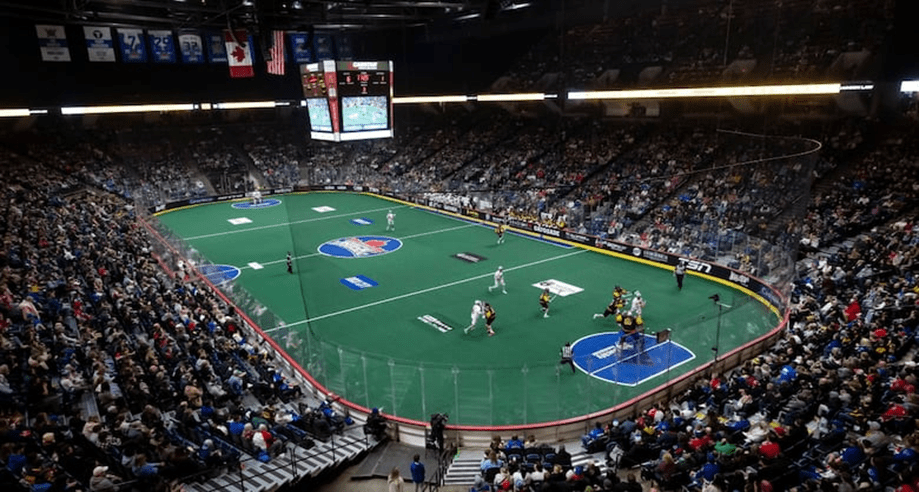
But whether it’s the English Premier Soccer League, American Football, NBA Basketball, European or NHL Hockey, Lacrosse, or Rugby, each sport is based on the fundamental principles of defending territory and penetrating an opponent’s territory. Once a team has invaded an opponent’s territory, it must maximize its opportunities by scoring goals, baskets, or touchdowns. One need only glimpse a basketball court to determine the objective of a game played on “the hardwood.” A raised hoop supported at each end of the rectangle would not even confound the Geico caveman. Hockey is equally simple in its primary objective; however, a caveman might have difficulty following the puck. Soccer and Lacrosse, with their netted goals positioned at opposite ends of a rectangle, are no one’s idea of a profound mystery. Football and Rugby are somewhat trickier because they are games that allow participants to score in two ways: by kicking a ball through a goalpost and by successfully traversing an opponent’s territory. But what happens on this field?

Mmm. That’s not a rectangle. Nor is it a square or oval. It’s… a diamond? Moreover, it’s a diamond with a station positioned every ninety feet. And what’s with that mound of dirt plopped in the middle of the diamond, and why is it elevated? And since we’re asking questions, can someone explain the purpose of the arc-shaped pasture beyond the diamond? Do people assemble to watch cows graze?
At a glance, guessing what takes place on a baseball field to achieve the game’s objective would be no wilder an endeavor than trying to explain how electromagnetic energy forms from galactic nuclei. Does that equate to baseball not being a game based on the utilization of strength and agility to sustain territorial dominance? Yes! Moreover, it’s a game whose formula is so unique and original that it’s the defense that possesses the ball.
Yeah, but for all its uniqueness and originality, baseball is too slow…
Is it? Are you sure about that? Wanna test that theory? Let’s begin: A pitcher, standing on a mound, releases a small white orb. The orb travels 60’ 6’’ at a speed of 98 miles per hour. The batter, awaiting the offering, swings and lines the orb two hundred feet into the arc-shaped pasture. The center fielder ranges to his right, snares the orb on one bounce, and then retraces the path of the orb by firing it two hundred feet back to the catcher—meanwhile, the baserunner who was standing on second base races 180 feet to home plate. While the throw was traveling toward home plate, the player who struck the orb replaced the baserunner at second base, 180 feet from home plate. Now, let’s do some math: 60+200+200+180+180=820. That’s 820 feet of real estate covered in how many seconds? 4.5? Maybe five flat? Can anyone name another sport that can cover that much ground in so little time? No? I didn’t think so.
Yeah, but baseball players aren’t elite athletes like those who play other sports…
Many years ago, I read Roger Kahn’s baseball opus titled The Boys of Summer. Kahn was a beat writer for the Brooklyn Dodgers and later the Los Angeles Dodgers. Kahn was a great lover of the game, who went as far as he could, but never sniffed a major league field. One day, the Dodgers invited their beat writer onto the field for practice. Kahn stepped into the batter’s box. Clem Labine pitched. After one pitch, Kahn stepped out of the batter’s box and muttered to himself, “I always wanted to play this game. But not this game.” Labine threw a “competitive” pitch instead of a typical batting practice pitch. The ball bore in on Kahn with such velocity that he heard it hissing. His career was over after one pitch.
The movements of baseball are so ingrained in the American ethos that we tend to take them for granted. But make no mistake, baseball is quite an athletic enterprise. Just ask all-time basketball great Michael Jordan, who gave baseball a whirl and couldn’t get past the Double-A level. You can’t blame MJ for wanting to pursue something he loved, but he learned the hard way that elite athleticism doesn’t begin and end with sprinter speed and an explosive vertical leap. For example, a third baseman diving to snare a 100mph ground ball, then exploding off the grass, and firing a strike 120 feet across the diamond to the first baseman is an astounding athletic maneuver.
Baseball fools us. Because it isn’t played by athletes of a certain height or size, but instead by those with physiques one might expect to see on neighbors walking their dogs, it tricks us into thinking it’s less of a sport and more of a “game” or an “activity.” And yet it’s a widely accepted theory that hitting a small orb traveling at a speed approaching 100mph with a stick no wider than the orb itself is the most challenging feat in all of sports. Athleticism aside, baseball can’t get off the ground without enough people blessed with superhuman hand/eye coordination. It also can’t get off the ground without those willing to do the most difficult job in sports: Catch. My wife recently asked, after a batter swung and redirected a 100mph two-seam fastball flush into the facemask of JT Realmuto, “Who would want to be a catcher?” Playing the position of catcher in the Major League is akin to underwater welding and cave diving; they’re necessary jobs, and we’re grateful there are enough crazy people to do them.
While there’s life, there’s hope – Cicero
…Although I prefer Yogi Berra’s oxymoronic philosophy, “It ain’t over till it’s over.” Terry Bradshaw, Kareem Abdul Jabbar, and Bobby Orr could not make such a declaration as It ain’t over till it’s over. Often, they looked up at the score, the clock, and could easily determine, Yeah, this puppy’s a done deal. Many NFL Football games are determined long before the clock registers quadruple zero. In baseball, you must record all twenty-seven outs, and often the last three prove the trickiest. It’s for that reason that baseball was designed to break your heart. The suddenness of baseball can be crushing. In football, whether you’re rooting for the offense to succeed or the defense, a game-winning drive is a gut-wrenching affair. Often, the offense penetrates deep into the defense’s territory. Precious seconds of the game clock tick away. Finally, the coach looks up at the clock and signals to the referee for a time-out. Next, the field goal kicker trots onto the field. Football gives its fans ample time to reconcile the disappointment of a loss well before the merciless element of time runs out.
In hockey, even a play as exhilarating as a sudden-death overtime goal has its developmental moments. The puck reverses from left to right, finding the stick of someone who has skated to a crease of daylight, allowing him to fire on the goaltender.
Often, baseball is more merciless than sudden-death overtime. The score is 6-4. There are two men on base with two outs. It is the ninth inning, and the batter is down to his last strike. Every spectator is on their feet, wringing their hands together, cheering wildly, and anticipating the outcome. Even the best hitters have but a thirty-percent success rate; thus, the pitcher has the advantage. Nevertheless, the pitcher must challenge the batter—one pitch, one strike, is all that’s needed for a throng of thousands to erupt in jubilation. The batter digs in. The pitcher gets his sign from the catcher and then stares in at the hitter as the crowd noise crescendos. The pitcher has the advantage; he knows the pitch selection and the location; the hitter can only guess. The crowd is hopeful, cautiously confident that he, who has been assigned the responsibility of sealing the opponent’s fate, will throw strike three. After all, he has the decided advantage.
But wait! What was that sound? It was the crack of a bat that somehow managed to echo above the crescendoing crowd. Next came the flight of a ball viewed by thousands of helpless eyes. And then there was silence.
Woe are those compelled to love a game built on failure and heartbreak. But hope springs eternal, and there is always next year.
*****
The Age of Anxiety
by
Michael DeStefano
A Not So Unintended Consequence
When one is compelled to tote a heavy load, one of two things will typically happen: The bearer of the burden will develop such fiber and strength that they no longer notice the weight, or the weight will become burdensome to the point of hastening a collapse.
The heaviest burdens tend to be invisible—shapeless albatrosses that are adept at lurking in shadow, tricksters that manage to squeeze themselves into tight spaces and layers we would never think to look. Worse, their craftiness yields vulnerability that goes undetected until one is wholly consumed and has become a mental and emotional cripple, or numb.
Indeed, you guessed it: the burdens or afflictions I’m alluding to are anxiety and depression. So why have I chosen to broach such a “sunny” topic during the bleakest season (winter)? In my humble opinion, anxiety and depression (particularly anxiety) have surpassed being a contagion and have become normalized. Moreover, why we’re burdened with the thrust of anxiety may not be for the reasons we suspect. From a ten-thousand-foot view, one might be quick to cite the typical unrest many experience over race, gender, politics, and intermural culture wars; otherwise, the handy ensemble we look to blame when we’re too lazy or frightened to look beyond the ends of our noses. But what if we ignored the low-hanging fruit and dug a little deeper? What might we find?
The Water They Forgot To Chart
Clinical psychologists have measured generational behavior and observed a decline in happiness and an uptick in negative emotions such as anxiety. For example, those of the Silent Generation are far less anxiety-laden than Zoomers; Boomers, on aggregate, are happier than Millennials; Gen Xers, the middle child in this scenario, are fluid and, depending on the stressor, could go either way.
What made the Silent Generation so darn happy? Weren’t they born into the Great Depression and then sent off to war? The answers are “yes” and “yes.” However, they were also a generation that became adults in the same world they grew up in. The world they knew and understood at age fifteen was more or less the same one that awaited them at age thirty-five. No generation since has enjoyed such stability. The Silent Generation had thirty years of radio (the 20s, 30s, and 40s) before television hit the market; they were excited and starving for the change. They watched programs on their 20-inch screens for three decades (the 50s, 60s, and 70s) before larger screens and cable TV (a world beyond the three major networks and UHF) became available. Cable kept them engrossed for fifteen years before the home computer, and the internet shook them awake. At age 75, some dabbled and some said, “We’re better off without it; just give us our TVs and newspapers and leave us alone.” Right or wrong, at least they had a choice.
No one presently alive is an adult in the world they grew up in. In the same timeframe requireded to progress from broadcasting to telecasting, we’ve seen analogue dial-up internet, the launch of the digital age, the advent of the smartphone along with its toxic partner (social media), we’ve learned that clouds are not just a concern for meteorologists, and are presently wringing our hands while wondering to what extent AI will alter what it means to be a human being on Planet Earth. The term for experiencing such rapid growth and progression is “living in a state of hypernovelty.” One might liken such a state to body surfing when the ocean is at its roughest. Before you can manage your equilibrium after riding a wave, another comes along and knocks you on your ass. Doubtless, anxiety would mark one of several stressors one might experience when forced to live without ever feeling their feet squarely planted beneath them.
Politics Misses The Mark… Yet Again!
There are two types of people in the world: those who, on the first day of school, open the algebra textbook and cry, “Holy shit, am I in trouble,” and those who say, “I get it; it makes perfect sense.” In other words, while the strong can fight their way through the rough surf and continue riding the waves, the weak must retire to the sand and their beachchairs. Moreover, as the range of “human generations” expands as we wait longer to produce offspring, technological generations are shrinking at an alarming rate. This trend will not simply derail the DE&I initiative championed by those of a particular political stripe; it will kill it altogether, as the stronger and more adaptable among us will thrive while the weaker, who struggle with concepts and newness, will not.
Sometimes technology functions as a tool we can apply to achieve a satisfactory end. Often, it’s a master we feel compelled to obey. And, thus, we arrive at the questions, “Who is serving whom?” and, “Does ‘it’ exist for our sake, or do ‘we’ exist for its sake?” For example, radio and television were public services regulated by the FCC and guided by a rating system that adhered to the long-standing principle: The Customer is Always Right. The internet, once marketed as The Great Information Highway, also functioned as a public service but has long since become a substrate that spawned a hailstorm of entities, driving a species hardwired for socialization into isolation and rendering the customer impotent.
In closing, I would say the issues of race, gender, politics, and intermural culture wars may still be present, but the tools with which they’re being weaponized are far more insidious and inimical than their predecessors. These new tools accentuate every aspect of human negativity while constantly moving the goalposts—anxiety as a pathology having been the post moved the furthest. Alas, assailed with anxiety has become as normal as watching a Silent Generation couple jitterbugging in a high school gymnasium in the 1950s; a Boomer couple stoned at a Stones concert in the 1970s; an adult Gen X couple at a dinner party, bragging about their Vanguard portfolio; a Millennial corporatist carrying water for the Stanford University language police; and lastly, a teenaged Zoomer telling a parent to go fuck themselves. Each of us, across generations, is wound too tight by a world that no longer permits a deep breath, let alone a pause to inhale the scent of a rose. We need to build a dam stout enough to allow the River of Anxiety time to forge an identity and develop clear initiatives before it empties into an ocean and is lost forever.

*****
The Time Traveler at the Tavern
By
Michael DeStefano
Late one afternoon, shortly before the happy hour was about to begin, a man, who one might apply the descriptors “Seasoned” and “Worldly,” strolled into a neighborhood pub. He was aged yet elegant, this man who had lived in many places, currently residing in America and vacationing abroad. His long tweed coat and duck-billed tam made a suitable ensemble for his long, lean frame. Couched in his eyes and deportment was the wisdom of a sage, or one might easily allege. He ordered a scotch, a Johnny Walker Black, and was quite declarative when instructing the barkeeper to use only three ice cubes. The barkeeper showed no indication that the older man’s specificity had annoyed him. In fact, the barkeeper smiled that a man of ostensible sophistication had respectfully tipped his cap. Moreover, it was likely that the gentleman was a man whose acquired adult habits had long predated the barkeeper’s birth, and respecting age is a time-honored etiquette.
The man put his nose to the glass, inhaled, then ceremoniously raised the glass and its contents, which included three ice cubes, to the barkeeper. But before he managed a sip, two young Americans, sporting attire that touted allegiances to their respective places of academia (one wore red, the other blue), called, “Sir, you’re a man of the world; perhaps you could spare a moment to lend some perspective to the latest embroglio overseas. In your estimation, do you see it as a genocide?”
When the comforting burn of Johnny Walker subsided in his esophagus, the gentleman addressed two men born when the World Trade Centers still pierced the clouds and asked, “Am I being called upon to settle a mild debate or partake in a discussion?”
“Perhaps a little of each,” said the man wearing red, as both he and his blue-clad friend tried to guess the gentleman’s country of origin by the vestige of an accent stubborn to disappear altogether.
“It’s a funny matter, language,” the gentleman began. “Etymologically speaking, that is,” he thought to clarify. “Over time, words can lose, gain, and change meaning. It’s only natural for those nascents who had cut their teeth in a world of technologically driven hyper-novelty and connectivity to view such matters as genocide differently, and that its meaning would diverge from how I had long ago come to understand it.”
The gentleman’s reasoning prompted the man in blue to ask, “So, you do not agree that what’s taking place overseas qualifies as genocide?” The man in blue wasn’t challenging the gentleman but was curious to learn how their definitions differed.
“Correct, I do not agree that it is genocide.” The gentleman was firm but respectful in making his edict. “However, disagreeing that it meets the criteria of genocide is hardly akin to lauding the initiative. Moreover, there seem to be discrepancies in the current standard,” the gentleman explained. “For example, if a tribe isn’t necessarily beloved, they tend to have a very short leash when acting out, whereas another tribe owning steep financial implications to the West gets a much longer leash. One could even claim that the latter’s atrocities go largely ignored in the States, particularly in the realm that just spawned you.”
The gentleman did not deem it necessary to clarify academia as the realm to which he had alluded.
The two younger men felt the ground shifting beneath their feet. When they recovered, the fellow clad in red offered the impassioned entreaty, “But surely, Sir, you must see what most have reconciled is reckless slaughter as behaving in a ‘genocidal’ manner, if not rising to the United Nations’ strict standard for genocide?”
“Young, Sir,” the gentleman began, “to the best of my knowledge, no one in your country of origin ever bothered to pose the question: Gee, I wonder how many blond-haired blue-eyed girls were underneath those piles of rubble a certain superpower turned Berlin into in the mid-1940s? Then again, people tend to stray from asking questions when they suspect the answer could turn their stomachs. It was understood that the Third Reich had to be reckoned with in a way that saw its total annihilation, collateral damage notwithstanding. Afterward, we did what our species always does as the embers of destruction cool: tell one another bedtime stories to get through the night, so that we can wake believing that the greater good was served.”
“But surely, Sir,” began the man clad in blue, “you cannot compare the faction that committed the act that elicited the response that presently has us in a dither to the Third Reich? Nor could you allege that those caught in the crossfire are more complicit than those who watched the Third Reich rise to power.”
“I’m afraid, young Sir, that those who, as you say, are caught in the crossfire may find themselves in that unfortunate position for reasons wholly dissimilar; however, their ignorance of a certain regime and its agenda is no less willful. But,” the gentleman said sharply, “before we pivot too far off your original question, I’d like an opportunity to raise a point: In 1941, long before either of you was born, your country suffered a sneak attack on one of its military bases; it claimed the lives of 1,800 servicemen. Your president, famously, echoed the sentiment, “This day will live in infamy.” Four years later, revenge was exacted on an unimaginable scale. Weaponry that the world had never before seen detonated. The result was a quarter of a million immediate deaths, with residual effects pushing that number into the millions. Was that genocide? Are you prepared to call a place many have dubbed “the land of opportunity” a genocidal regime?
“Many years later, your nation lost 2,200 in what was an unprecedented terrorist attack. The response launched a war that killed nearly half a million, most of whom were not soldiers. Was that genocide? I’m guessing you think not. Meanwhile, the U.N. dragged its feet when trying to resolve whether the unspeakable atrocity in Darfur was an act of genocide.” The gentleman paused to allow room for a reply. When none came, he added, “Indeed, over time, words can undergo a slight alteration in meaning, but there are some that must remain well couched in their origins. Retaliation, irrespective of how one feels about the retaliator or their tactics, is not genocide. But by all means, be appalled. The sanctity of life crumbling due to human failings is a tragedy that should sicken people of all stripes. Still, we must choose our words carefully. And if this gentleman barkeeper would be kind enough to pour me another scotch, I would be glad to discuss other words that may have gotten scrambled during your pursuit of knowledge.”
Beaming with curiosity, both young men asked, “Where are you from, Sir?”
The gentleman’s eyes twinkled when he told them, “I am from many places and the product of many wisdoms. My education is as deep as it is vast. Incidentally, I say that with all humility, for it was the world—its magnanimity and treachery, compassion and cruelty, benevolence and wickedness—that has taught me. I have learned in my time and travels that there are but a few objective truths; everything else is a matter of perspective, and that enforcing the former and ignoring the latter will clear a path for a tyrant to ascend. You would be wise to remember that. Very wise, indeed.”
And they sat, sipped, and enlightened one another to a world that’s forever changing yet stubbornly remains the same. When the gentleman rose from his stool, the young men asked, “Where are you off to, Sir?”
The gentleman checked the time on his pocketwatch.
“That’s some piece,” the man in red intoned.
“It must be centuries old,” the man in blue added. “Wherever did you come by it?”
The gentleman grinned ironically and said, “I’ve enjoyed your time. It has its share of perks. But I must be getting along.” He tipped his cap and wished them luck.


America’s Diamond
All team sports share common components and are derivatives of one another. All take place either indoors or outdoors, on rectangular fields of various sizes, with a fixed goal at each end. Some look like this:
Others look like that:
Or this:
Or that: