All team sports have common components and are derivatives of one another. All take place either indoors or outdoors and on rectangles of various sizes, with a fixed goal positioned at each end. Some look like this:
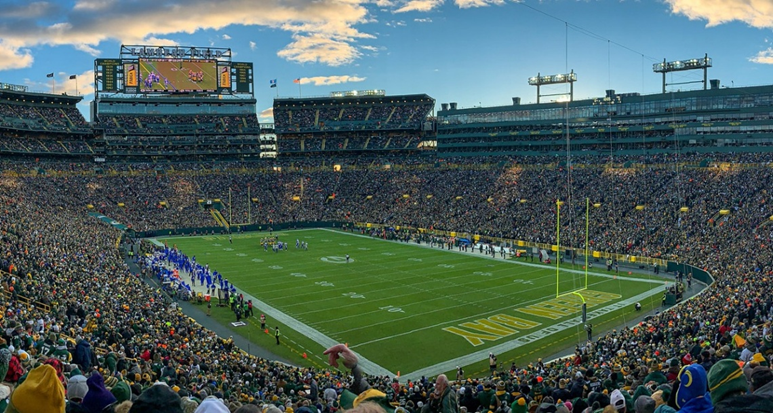
Others look like that:

Or this:

Or that:

Or this:

Or that:

But whether it’s the English Premier Soccer League, American Football, NBA Basketball, European or NHL Hockey, Lacrosse, or Rugby, each sport is based on the fundamental principles of defending territory and penetrating an opponent’s territory. Once a team has invaded an opponent’s territory, it must maximize its opportunities by scoring goals, baskets, or touchdowns. One need only glimpse a basketball court to determine the objective of a game played on “the hardwood.” A raised hoop supported at each end of the rectangle would not even confound the Giecko caveman. Hockey is equally simplistic concerning its prime directive; however, a caveman might have difficulty following the puck. Soccer and Lacrosse, with their netted goals positioned at opposite ends of a rectangle, are no one’s idea of a profound mystery. Football and Rugby are somewhat trickier because they are games that give their participants two ways to score: kicking a ball through a goalpost and successfully traversing an opponent’s territory. But what happens on this field?

Mmm. That’s not a rectangle. Nor is it a square or oval. It’s… a diamond? Moreover, it’s a diamond with a station positioned every ninety feet. And what’s with that mound of dirt plopped in the middle of the diamond, and why is it elevated? And since we’re asking questions, can someone explain the purpose of the arc-shaped pasture beyond the diamond? Do people assemble to watch cows graze?
At a glance, guessing what takes place on a baseball field to achieve the game’s objective would be no wilder an endeavor than trying to explain how electromagnetic energy forms from galactic nuclei. Does that equate to baseball not being a game based on the utilization of strength and agility to sustain territorial dominance? Yes! Moreover, it’s a game whose formula is so unique and original that it’s the defense that possesses the ball.
Yeah, but for all its uniqueness and originality, baseball is too slow…
Is it? Are you sure about that? Wanna test that theory? Let’s begin: A pitcher, standing on a mound, releases a small white orb. The orb travels 60’ 6’’ at a speed of 98 miles per hour. The batter, awaiting the offering, swings and lines the orb two hundred feet into the arc-shaped pasture. The center fielder ranges to his right, snares the orb on one bounce, and then retraces the path of the orb by firing it two hundred feet back to the catcher—meanwhile, the baserunner who was standing on second base races 180 feet to home plate. While the throw was traveling toward home plate, the player who struck the orb replaced the baserunner at second base, 180 feet from home plate. Now, let’s do some math. 60+200+200+180+180=820. That’s 820 feet of real estate covered in how many seconds? 4.5? Maybe five flat? Can anyone name another sport that can cover that much ground in so little time? No? I didn’t think so.
Yeah, but baseball players aren’t elite athletes like those who play other sports…
Many years ago, I read Roger Kahn’s baseball opus titled The Boys of Summer. Kahn was a beat writer for the Brooklyn Dodgers and later the Los Angeles Dodgers. Kahn was a great lover of the game, who went as far as he could, but never sniffed a major league field. One day, the Dodgers invited their beat writer onto the field for practice. Kahn stepped into the batter’s box. Clem Labine pitched. After one pitch, Kahn stepped out of the batter’s box and muttered to himself, “I always wanted to play this game. But not this game.” Labine threw a “competitive” pitch instead of a typical batting practice pitch. The ball bore in on Kahn with such velocity that he heard it hissing. His career was over after one pitch.
The movements of baseball are so ingrained in the American ethos that we tend to take them for granted. But make no mistake, baseball is quite an athletic enterprise. Just ask all-time basketball great Michael Jordan, who gave baseball a whirl and couldn’t get past the Double-A level. You can’t blame MJ for wanting to pursue something he loved, but he learned the hard way that elite athleticism doesn’t begin and end with sprinter speed and an explosive vertical leap. For example, a third baseman diving to snare a 100mph ground ball, then exploding off the grass, and firing a strike 120 feet across the diamond to the first baseman is an astounding athletic maneuver.
Baseball fools us. Because it isn’t played by athletes of a certain height or size, but instead by those with physiques one might expect to see on neighbors walking their dogs, it tricks us into thinking it’s less of a sport and more of a “game” or an “activity.” And yet it’s a widely accepted theory that hitting a small orb traveling at a speed approaching 100mph with a stick no wider than the orb itself is the most challenging feat in all of sports. Athleticism aside, baseball can’t get off the ground without enough people blessed with superhuman hand/eye coordination. It also can’t get off the ground without those willing to do the most difficult job in sports: Catch. My wife recently asked, after a batter swung and redirected a 100mph two-seam fastball flush into the facemask of JT Realmuto, “Who would want to be a catcher?” Playing the position of catcher in the Major League is akin to underwater welding and cave diving; they’re necessary jobs, and we’re grateful there are enough crazy people to do them.
While there’s life, there’s hope – Cicero
…Although I prefer Yogi Berra’s oxymoronic philosophy, “It ain’t over till it’s over.” Terry Bradshaw, Kareem Abdul Jabbar, and Bobby Orr could not make such a declaration as It ain’t over till it’s over. Often, they looked up at the score, the clock, and could easily determine, Yeah, this puppy’s a done deal. Many NFL Football games are determined long before the clock registers quadruple zero. In baseball, you must record all twenty-seven outs, and often the last three prove the trickiest. It’s for that reason that baseball was designed to break your heart. The suddenness of baseball can be crushing. In football, whether you’re rooting for the offense to succeed or the defense, a game-winning drive is a gut-wrenching affair. Often, the offense penetrates deep into the defense’s territory. Precious seconds of the game clock tick away. Finally, the coach looks up at the clock and signals to the referee that he wants a time-out. Next, the field goal kicker trots onto the field. Football gives its fans plenty of time to reconcile the disappointment of a loss well before the merciless element of time runs out.
In hockey, even a play as exhilarating as a sudden-death overtime goal has its developmental moments. The puck reverses from left to right, finding the stick of someone who has skated to a crease of daylight, allowing him to fire on the goaltender.
Often, baseball is more merciless than sudden-death overtime. The score is 6-4. There are two men on base with two outs. It is the ninth inning, and the batter is down to his last strike. Every spectator is on their feet, wringing their hands together, cheering wildly, and anticipating the outcome. Even the best hitters have but a thirty-percent success rate; thus, the pitcher has the advantage. Nevertheless, the pitcher must challenge the batter—one pitch, one strike, is all that’s needed for a throng of thousands to erupt in jubilation. The batter digs in. The pitcher gets his sign from the catcher and then stares in at the hitter as the crowd noise crescendos. The pitcher has the advantage; he knows the pitch selection and the location; the hitter can only guess. The crowd is hopeful, cautiously confident that he, who has been assigned the responsibility of sealing the opponent’s fate, will throw strike three. After all, he has the decided advantage.
But wait! What was that sound? It was the crack of a bat that somehow managed to echo above the crescendoing crowd. Next came the flight of a ball viewed by thousands of helpless eyes. And then there was silence.
Woe are those compelled to love a game built on failure and heartbreak. But hope springs eternal and there is always next year.
 Michael's Corner
Leave a comment